Omaha, Nebraska New Delhi, India
Everyone deserves to feel beautiful
We collect gently used traditional Indian clothing in Omaha and send it to girls in underserved communities in New Delhi, so they can join the festivals and celebrations that are central to who they are.
A student-led nonprofit founded by Kavya Dutt Bhardwaj
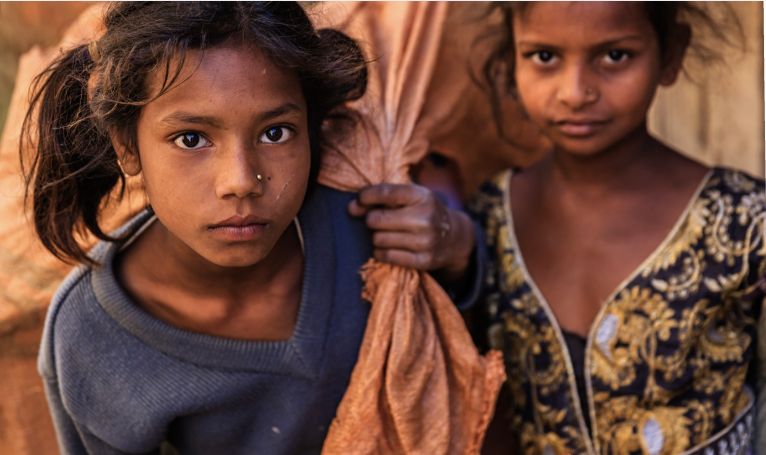

What do you do with traditional clothing that simply won't fit anymore? Traditional Indian clothing can be expensive, custom-made, and absolutely stunning. Throwing it away or donating it to a general clothing donation, where it will probably be discarded or misused, is not the best solution.
Donate to Threads of Joy, and we will redistribute your gently used traditional clothing to underprivileged children in India.
One lehenga
- Worn
- Once or twice a year
- Outgrown
- In a season or two
- Then
- Folded away in a closet
- Next stop
- A girl in New Delhi
How it works
From your closet to a girl in Delhi
- Omaha, Nebraska
You donate
Drop gently used traditional Indian clothing into one of our donation boxes around Omaha.
- Our volunteers
We sort and pack
Teen volunteers check every piece, sort it by age and type, and pack it with an item list.
- New Delhi, India
Girls receive it
Our partner NGO in New Delhi gets the clothing to the children who need it.
Our mission
To collect and distribute traditional Indian clothing to young girls in India so that they feel empowered to participate in cultural and religious celebrations.
Get involved
Three ways to help
Give clothing
With donation drop-off locations around Omaha, donating is quick and simple. Bring your gently worn clothing to a box and our volunteers will pack and ship it to our partner NGO in New Delhi.
What we acceptGive to shipping
Don't have clothing to donate? You can still make a difference. Money donations cover shipping and supply costs so we can reach more kids in need.
Donate on GoFundMeGive your time
Are you a teen who cares about this cause? Volunteering is easy. Fill out our interest form to sign up. We have in-person and online opportunities.
Become a volunteerSave the date
Threads of Joy Fashion Show
An evening celebrating traditional Indian clothing, raising funds and donations for girls in New Delhi. Venue and tickets coming soon.
About us
It really is so much more than clothing
How a girl who once hid her culture started a nonprofit to share it.
Why I started Threads of Joy
If someone asked me when I feel the most beautiful, I would have a clear answer. It is when others in my community surround me, celebrating our culture, all dressed up in traditional outfits. I love the feeling of spinning in my sparkly lehenga and jingling as I dance to my favorite Bollywood music.
But if you asked me this question 5 years ago, I would have had a very different answer. Little 10-year-old Kavya had a very different idea of beautiful. One that definitely did not include embarrassing myself in my cultural clothing. At 7 years old, my family and I moved from New Delhi, India, to the United States. I was determined to erase every Indian part of myself to make me more American.
If I could talk to that little girl now, I would tell her that the US is an amazing place made of all kinds of cultures, religions, and nationalities. I didn't have to erase any part of myself to fit in, and the only way I would find my people was when I learned to embrace every part of myself.
As I started to wear traditional clothing more often, I discovered how amazing it felt. I felt a connection to my culture like never before and began to wonder how I hated this all these years. However, through this process, I discovered kids grow out of traditional Indian clothing incredibly fast. It seemed so wasteful, only wearing a piece of clothing once or twice a year before having to tuck it away in a closet for years, not knowing what to do with it.
This exact situation made my mind start racing. What else could be done with this clothing? I knew a ton of friends who dealt with the same problem and decided to research what people were doing with their gently used Indian clothing. I discovered an entire community of South Asian women with saris, kurtis, lehengas, and dupattas going unused after Diwali and weddings. That's when I started working on Threads of Joy. It started as a poster and logo on Canva, and snowballed into this amazing organization.
When I first started, I would have been overjoyed if even one girl could feel the way I did wearing the clothes I loved. Thank you to everyone who has donated, volunteered, partnered with us, or even just read this message all the way through! Your contribution is seen and so appreciated. It really is so much more than clothing.
Kavya Dutt BhardwajFounder, Threads of Joy
I didn't have to erase any part of myself to fit in.
Why cultural clothing matters
The story stitched into a dupatta
Every day, I see more and more of my Indian culture being erased. The chai I would sit on the porch and sip with my grandparents in the afternoons has become the chai tea latte a commuter picks up from Starbucks late to work in the morning, no recognition of where it came from. The dupatta my mom carefully pinned to the shoulder of my lehenga has become the Scandinavian scarf, a new style on prom dresses. There is no recognition of where these things have come from and their importance to our culture.
For example, the dupatta is not just a piece of clothing. It is also a symbol of resistance for India during British rule. Sarojini Naidu, an Indian activist who worked alongside Mahatma Gandhi, was a huge activist for a type of fabric used in dupattas known as Khadi. It was part of the Swadeshi movement, which was focused on Indian national pride and boycotting British goods. When these traditions are stolen and made into something more digestible for global audiences, it makes us lose a part of our history and traditions. Even worse, young Indian kids grow up learning that version of our history, instead of where it really originated from.
Wearing cultural clothing and understanding the value and history that exist in the embroidery and style is the real mission of Threads of Joy. When kids have pride in what they wear, they will strive to understand the history behind it as well. It encourages education about lost traditions and connects new generations to those who came before. Many of the traditional pieces of clothing in my closet have been passed on by the women in my family for generations, and have sparked my interest in older styles of Indian clothing and how they came to be.
The lehenga hanging in the back of your closet or the folded-up sari in your drawer may seem useless to you, but for kids in underserved communities, it can be a dream come true. Many kids feel out of place during festivals and ceremonies without cultural clothing, since their families can't afford it. A common Diwali gift in India is new clothing, and many of these children's families can't afford it. This causes clothing insecurity and, oftentimes, a disconnect from culture.
Clothing insecurity is a phenomenon when someone does not have access to clothing that fits properly, is seasonally appropriate, or, in this case, is not appropriate for the occasion. Those who experience this can experience major tolls on their mental health and social dignity. Dignity is at the core of what we do at Threads of Joy, and the connection between clothing and dignity is concrete.
That dignity can exist in many ways, but the way in which we hope to reach people is in the light in a little girl's eyes as she holds her very first lehenga that isn't torn or broken. It's beautiful and almost brand new. That dignity exists in a teenager wearing her kurta at her local temple, finally feeling confident in her clothing. The judging stares she once felt on her back suddenly feel like radiant smiles encouraging her through every step. And most importantly, this dignity exists in a new generation growing up confident in their culture and fully aware of the stories that shaped it.
Further reading: a think piece on the dupatta in The Harvard Crimson
When kids have pride in what they wear, they will strive to understand the history behind it as well.
Khadi
- What
- Hand-spun, hand-woven cloth used in dupattas
- Movement
- Swadeshi, boycotting British goods
- Champion
- Sarojini Naidu
Our vision
A world where every child has equal access to traditional clothing.
Donate clothing
Give your outfits a second celebration
We collect traditional Indian clothing in girls' sizes, from age 1 to 18. Here's what we accept and how to drop it off.
What we accept
Traditional pieces for girls
Sizes we sort into
Every piece should be
- Traditional Indian clothing for girls and young women
- In a girls' size, age 1 to 18
- Washed, with no odor or stains
- Free of rips and tears
- Working zippers, buttons, hooks and lacing
Please don't send
- Torn, stained or heavily faded pieces
- Broken zippers or missing closures
- Everyday Western clothing
- Clothing that hasn't been washed
Anything that doesn't meet these standards goes to Goodwill, so nothing goes to waste.
How to donate
Three simple steps
- At home
Check and wash
Go through the checklist above. Fold each piece and keep sets (top, bottom, dupatta) together in one bag if you can.
- Around Omaha
Drop it off
Bring it to a Threads of Joy donation box during a collection drive. Locations are posted below before each drive.
- That's it
We take it from here
Volunteers sort, log and pack every item, then send it to our partner NGO in New Delhi.
Drop-off locations
Locations for our next collection drive will be posted here. Have a large donation or can't make it to a box? Email us at threadsofjoyteam@gmail.com and we'll work something out.
FAQ
Questions about donating
Do the clothes need to be washed?
Yes. Please wash everything before donating. Pieces with odor or stains can't be sent.
What if my outfit is an adult size?
We focus on girls' sizes from 1 to 18. If you have adult saris or outfits you'd like to give, email us first and we'll let you know if we can use them.
Can I donate jewelry or bangles?
Right now we're focused on clothing only. We may add jewelry in a future drive.
Where do the clothes end up?
With girls in underserved communities in New Delhi, through our partner NGO there. It distributes clothing through schools, children's homes and community programs.
What happens to items you can't use?
Anything that doesn't meet our standards goes to Goodwill, so it still gets a second life.
Can I give money instead?
Yes. Shipping clothing to India is our biggest cost, and money donations go toward shipping and packing supplies. Email us at threadsofjoyteam@gmail.com and we'll tell you how to give.
Impact
Where the clothes go
We'll post our numbers, shipment updates and stories from our partners here as each package reaches Delhi.
Our story so far
From one poster to a movement
Threads of Joy begins
A poster and logo on Canva turn into a plan: collect outgrown traditional clothing in Omaha for girls in Delhi.
The first sets come in
Kavya repairs zippers and buttons on her own outfits to donate the first five full sets, and friends and family start adding theirs.
First community donation drive
Hundreds of donations arrive from Omaha's Indian community.
Sorted and packed
Volunteers sort every piece into five age groups and prepare a first test package for New Delhi.
Threads of Joy Fashion Show
Our first big event, celebrating traditional clothing and raising funds for shipping.
Partners
It takes a community
Temples, schools, businesses and NGOs help us collect clothing in Omaha and get it to girls in Delhi.
Distribution partner · New Delhi
Salaam Baalak Trust
A New Delhi organization that supports children living on and near the city's streets and railway stations. They receive our packages and get the clothing to the girls who need it.
Collection partner · Omaha
Hindu Temple of Nebraska
Hosted a Threads of Joy donation drive and shared it with the temple community.
Your organization?
Become a donation hub
Host a donation box, share a drive in your newsletter, or help us ship. Temples, student groups, schools and Indian businesses are all welcome.
Partner with usWho can partner with us?
Anyone! All organizations that want to support our mission through donations, volunteer work, or just promotion are encouraged to partner with us.
Get in touchVolunteer
Lend a hand, or a few hours
Most of our volunteers are South Asian teens in Omaha. You don't need any experience, just a little time and care.
In Omaha
Ways to help
Donation pickup
Collect clothing from our donation boxes during a drive.
Quality checking
Check each piece for rips, stains and working closures.
Folding and sorting
Sort by age group and type: lehengas, suits, kurtas, cholis and dupattas.
Inventory tracking
Log every item so we can report exactly what reached Delhi.
Drives and outreach
Set up donation drives and spread the word at temples, schools and stores.
Fashion show crew
Model an outfit, help with setup or run check-in at our December 4 show.
Traveling to India? Carry for a Cause
If you have space in your luggage on a trip to Delhi, you can carry a box of donated clothing for us. We give you a donation letter listing every item, and we can help cover an extra bag fee. Email us with your travel dates.
Volunteering from India
We also work with volunteers in India through our NGO partners, helping with distribution in Delhi. Get in touch if you'd like to help on the ground.
Contact
Let's connect
Questions about donating, partnering, volunteering or the fashion show? Email us and we'll get back to you.
Email the team
@threadsofjoy_official
Drive announcements, behind-the-scenes sorting days and updates from Delhi.
Follow usFor organizations
Partner with us
Tell us who you are and how you'd like to help: hosting a donation box, sharing a drive, or helping with distribution or shipping. We'll set up a short call.
See our partnersInquiry form
Prefer a form?
Send us your question through our form and a team member will reply by email.
Open the form
